

At the centre of the cosmati pavement in the Presbytery Earth is represented with a mottled blue marble. Sir George Gilbert Scott designed the fine cosmati pavement just a few decades before science fiction writers inspired the first rocket scientists to dream of travelling beyond the Earth’s atmosphere.
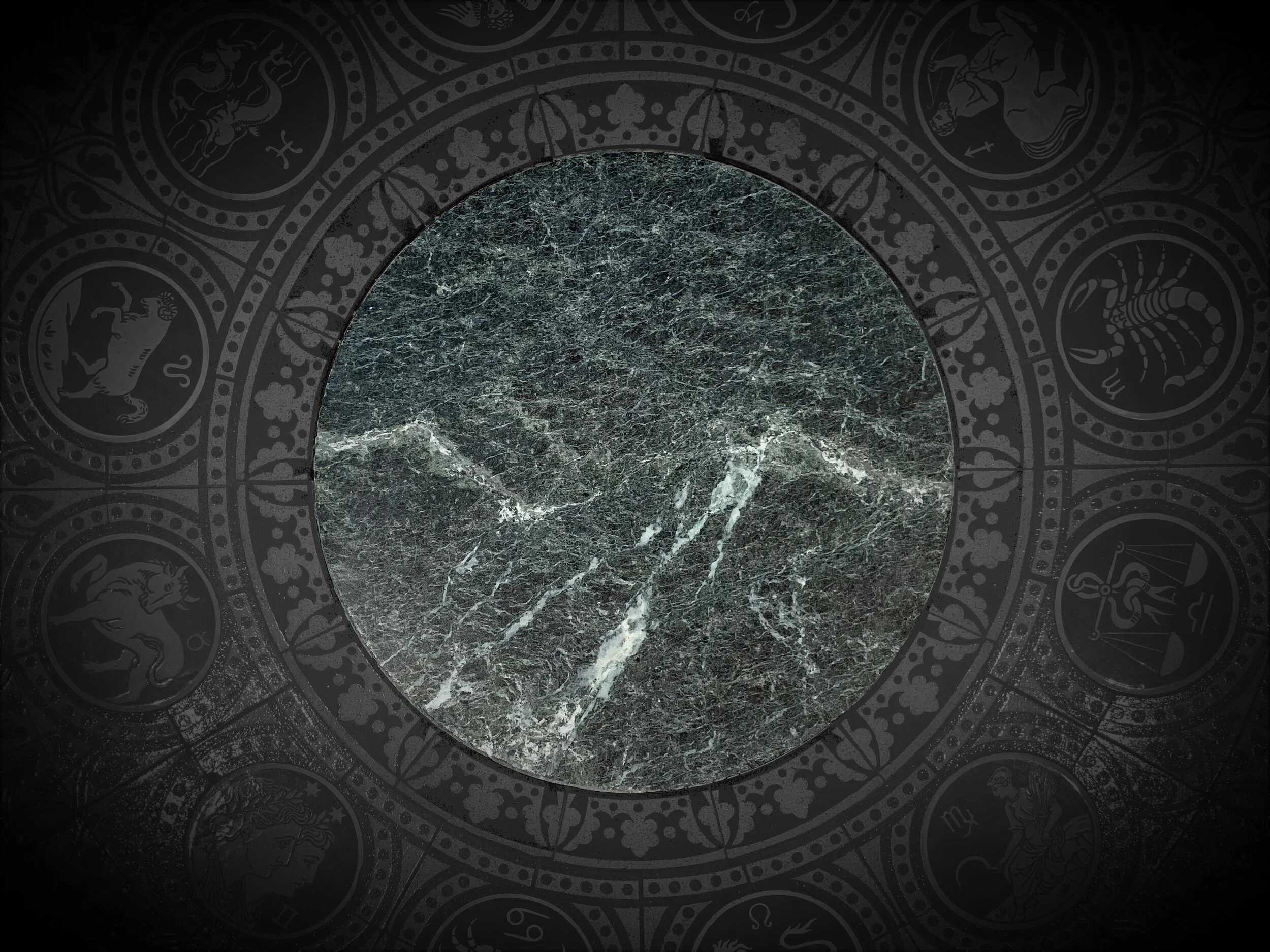
Scott’s use of blue marble with white veins to represent the Earth (possibly in a primordial state) was remarkably prescient. During the 19th century advancements in aeronautics had been largely limited to ballooning. It was the works of science fiction writers such as Jules Verne and H. G. Wells later in the century that first dared to dream of travelling beyond the Earth’s atmosphere, and in doing so inspired generations of thinkers and engineers in the early 20th century into achieving it.

Advancements in rocketry made in Germany in the wake of the First World War were refined during the Second World War in the production of the V-series of rockets (for ‘retaliatory’ or ‘reprisal weapons’), otherwise known as the doodlebug. Over 10,000 doodlebugs were fired at the main targets of London, Antwerp and Liege resulting in the deaths of an estimated 9,000 civilians and military personnel. A further 12,000 forced labourers and concentration camp prisoners died as a result of their forced participation in their production.
A V2 rocket fired vertically was the first object to reach space, in June 1944.
After the war, the Soviet Union launched the first satellite Sputnik and the first person above Earth’s atmosphere.

Spurred by the advances of their opponents in the Cold War, engineers of the US space agency NASA worked with Wernher von Braun and around 1,600 German rocket scientists in the production of the Saturn rocket series used in the Apollo program to send man beyond low Earth orbit.
Over 100,000 engineers, technicians and support staff are estimated to have worked on the Apollo program, culminating in landing twelve men on the moon in six spaceflights from 1969 to 1972.
On the final flight of the program, the crew of Apollo 17 turned their camera back toward Earth and took a photo that would become known as The Blue Marble.

FROM THE ARTIST
The artist Luke Jerram worked with detailed NASA imagery of the Earth's surface to produce Gaia. The installation aims to create a sense of the Overview Effect, which was first described by author Frank White in 1987. Common features of the experience for astronauts are a feeling of awe for the planet, a profound understanding of the interconnection of all life, and a renewed sense of responsibility for taking care of the environment. Watch this great film about the phenomenon.
The Sustainability series on the Cathedral website explores our responses to Gaia at Rochester Cathedral and our efforts to make the activity in and around the Cathedral more sustainable for the environment: rochestercathedral.org/sustainability
The photo would become one of the most reproduced images in history, and is considered a seminal moment in the formative history of the conservation movement. The view of Earth at this scale provided for many a new perspective on the fragility of our world and renewed a desire to conserve it in all of its wonder.